Ever stare at your dog’s glossy coat, bright eyes, and boundless energy—and wonder if their current kibble is really the best you can do? You’re not alone. Over 68% of pet owners now question whether commercial dry food meets their pet’s natural nutritional needs (AVMA, 2023). And with rising rates of pet obesity, allergies, and digestive issues, it’s time we talk about something more aligned with what dogs and cats evolved to eat: the biologically appropriate meal.
In this post, I’ll unpack exactly what “biologically appropriate” means for pets, why frozen raw or gently cooked options are gaining serious traction among veterinarians and holistic pet nutritionists, and—most importantly—how to choose, transition, and serve these meals safely. You’ll learn:
- Why species-appropriate nutrition matters more than marketing buzzwords
- How to decode labels like “raw,” “complete,” and “balanced”
- Step-by-step guidance on switching to frozen biologically appropriate meals
- Real-world results from pets who made the switch (including my own disaster-turned-success story)
Table of Contents
- What Exactly Is a Biologically Appropriate Meal?
- Why Frozen Food Is the Gold Standard for Biologically Appropriate Meals
- How to Safely Transition Your Pet to Frozen Biologically Appropriate Meals
- 5 Expert Tips for Serving & Storing Frozen Biologically Appropriate Meals
- Case Study: From Chronic Diarrhea to Tail-Wagging Vitality
- FAQs About Biologically Appropriate Meals
Key Takeaways
- A biologically appropriate meal mimics what dogs and cats would eat in the wild: high-protein, moderate-fat, low-carb, and rich in moisture.
- Frozen raw or gently cooked meals preserve nutrients better than kibble or canned foods subjected to high-heat processing.
- Not all “raw” brands are complete and balanced—look for AAFCO statements and veterinary nutritionist involvement.
- Transition slowly over 7–10 days to avoid GI upset.
- Freezing kills pathogens like Salmonella while preserving enzymes and amino acids.
What Exactly Is a Biologically Appropriate Meal?
If you’ve ever watched your cat bat around a toy mouse or seen your dog bury a bone “for later,” you’ve glimpsed their ancestral instincts. Domestication hasn’t changed their digestive biology much. Dogs are facultative carnivores; cats are obligate carnivores. That means they thrive on meat, organs, bones, and connective tissue—not corn, soy, or synthetic vitamins sprayed onto extruded kibble.
A biologically appropriate meal delivers nutrients in forms their bodies recognize and utilize efficiently: real muscle meat, organ meats (like liver and kidney), ground bone for calcium, and species-specific ratios of fat and protein. This approach is rooted in decades of veterinary research—including studies from the World Small Animal Veterinary Association (WSAVA)—which emphasizes that diet directly impacts immune function, skin health, dental integrity, and longevity.
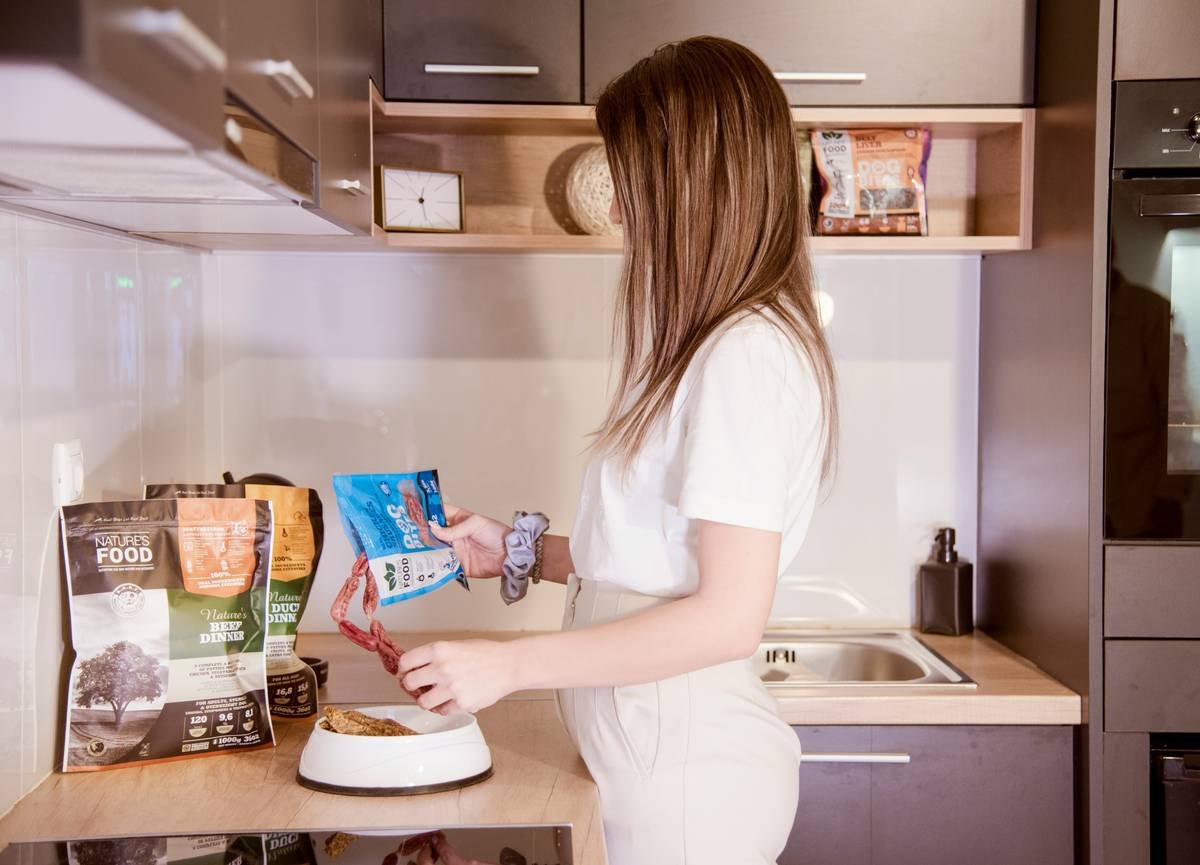
But here’s my confessional fail: I once bought a “grain-free” frozen patty labeled “natural” only to discover it contained peas as the #2 ingredient and zero organ meat. My pup, Juno, broke out in hives within 48 hours. Lesson learned? “Natural” ≠ biologically appropriate. Always read beyond the front label.
Why Frozen Food Is the Gold Standard for Biologically Appropriate Meals
Frozen pet food isn’t just convenient—it’s scientifically superior for nutrient retention. High-heat processing (like extrusion used in kibble) denatures proteins, destroys essential fatty acids like EPA/DHA, and reduces bioavailability of taurine—a critical amino acid for cats that deficiency can cause blindness or heart failure (Journal of Feline Medicine and Surgery, 2020).
Freezing halts enzymatic degradation without cooking the food. Think of it like flash-freezing wild salmon vs. baking it at 400°F—you keep the omega-3s intact. Reputable frozen brands also undergo HPP (High-Pressure Processing), which eliminates harmful bacteria while preserving nutritional integrity.
Optimist You: “Frozen = fresher, safer, more nutritious!”
Grumpy You: “Ugh, fine—but only if I don’t have to defrost it at 6 a.m. before work.”
Don’t worry—the section below covers time-saving hacks.
How to Safely Transition Your Pet to Frozen Biologically Appropriate Meals
Step 1: Choose a Complete & Balanced Formula
Look for an AAFCO statement like: “Formulated to meet the nutritional levels established by the AAFCO Dog/Cat Food Nutrient Profiles for [life stage].” Avoid “supplemental” or “for intermittent feeding” unless directed by a vet.
Step 2: Start Slow—Really Slow
Mix 25% frozen meal with 75% current food for Days 1–2. Increase to 50/50 on Days 3–5, then 75% new / 25% old on Days 6–7. Full transition by Day 10. Rushing causes diarrhea—trust me, I’ve mopped it up at 2 a.m.
Step 3: Thaw Properly
Never microwave! Place sealed pouch in cold water or fridge overnight. Microwaving creates hot spots and destroys nutrients.
Step 4: Monitor Stool & Energy
Stool should firm up within 3–5 days. Increased playfulness? Better breath? Those are green flags. Loose stools beyond Day 5? Pause and consult your vet.
5 Expert Tips for Serving & Storing Frozen Biologically Appropriate Meals
- Portion ahead: Pre-portion meals into daily servings using silicone molds—freeze flat for quick thawing.
- Add bone broth: Boost hydration (especially for cats) with warm, unsalted bone broth poured over thawed meals.
- Rotate proteins: Prevent sensitivities by rotating between chicken, beef, rabbit, and duck every 4–6 weeks.
- Store below 0°F: Keep freezer at or below -18°C to maintain food safety and enzyme activity.
- Don’t refreeze: Once thawed, serve within 48 hours or discard. No exceptions.
Terrible Tip Alert: “Just blend raw chicken breast and call it a day.” Nope. Without organs, bone, and precise calcium-phosphorus ratios, you risk nutritional deficiencies. Homemade raw requires veterinary nutritionist guidance.
Case Study: From Chronic Diarrhea to Tail-Wagging Vitality
Meet Milo, a 4-year-old rescue Beagle with a two-year history of intermittent diarrhea, ear infections, and dull fur. His owner tried three “sensitive stomach” kibbles—all failed. Bloodwork showed borderline B12 deficiency and elevated pancreatic enzymes.
After consulting Dr. Lisa Lippman, DVM, DACVN (a board-certified veterinary nutritionist), they switched Milo to a frozen, HPP-treated, chicken-based biologically appropriate meal containing liver, heart, and ground bone. Within 10 days:
- Stool normalized
- Ear scratching decreased by 90%
- Coat regrew thick and shiny
At his 6-month follow-up, Milo’s B12 levels were optimal, and his weight stabilized. “It wasn’t a cure-all,” his owner told me, “but finally giving him food his body was built for—that changed everything.”
My rant? Companies slapping “raw-inspired” on kibble bags while feeding pets 60% carbs. That’s not biology—that’s marketing theater.
FAQs About Biologically Appropriate Meals
Is frozen raw food safe from bacteria like Salmonella?
Reputable brands use HPP (High-Pressure Processing), which reduces pathogens to safe levels without heat. Always practice basic hygiene: wash bowls, sanitize surfaces, and wash hands after handling.
Can puppies or kittens eat biologically appropriate meals?
Yes—but only formulas labeled for growth or all life stages. They need higher calcium, phosphorus, and DHA for development.
Are biologically appropriate meals more expensive?
Yes, initially. But many owners report fewer vet visits for allergies, GI issues, and dental disease—offsetting long-term costs.
What if my vet says raw food is dangerous?
Some vets lack training in raw nutrition. Share WSAVA’s position paper on home-prepared diets and ask if they’re open to discussing commercially prepared, complete frozen options.
Final Thoughts
A biologically appropriate meal isn’t a trend—it’s a return to what our pets’ bodies evolved to thrive on. Frozen formats offer the safest, most nutrient-dense way to deliver species-appropriate nutrition without the guesswork of DIY. Yes, it takes a little planning. Yes, you’ll curse once when you forget to thaw dinner. But watching your pet’s eyes light up at mealtime—and seeing their health transform—that’s chef’s kiss.
Like a Tamagotchi, your pet’s health needs daily care. Feed them like the magnificent predators they are.
Haiku:
Raw beef, cold from freeze,
Tail wags, bright eyes, strong heartbeat—
Nature’s menu, served.